Built for the bin, not the lab.
Every LiRA site runs the same family of instruments, from the cable in the grain to the software that watches it all.
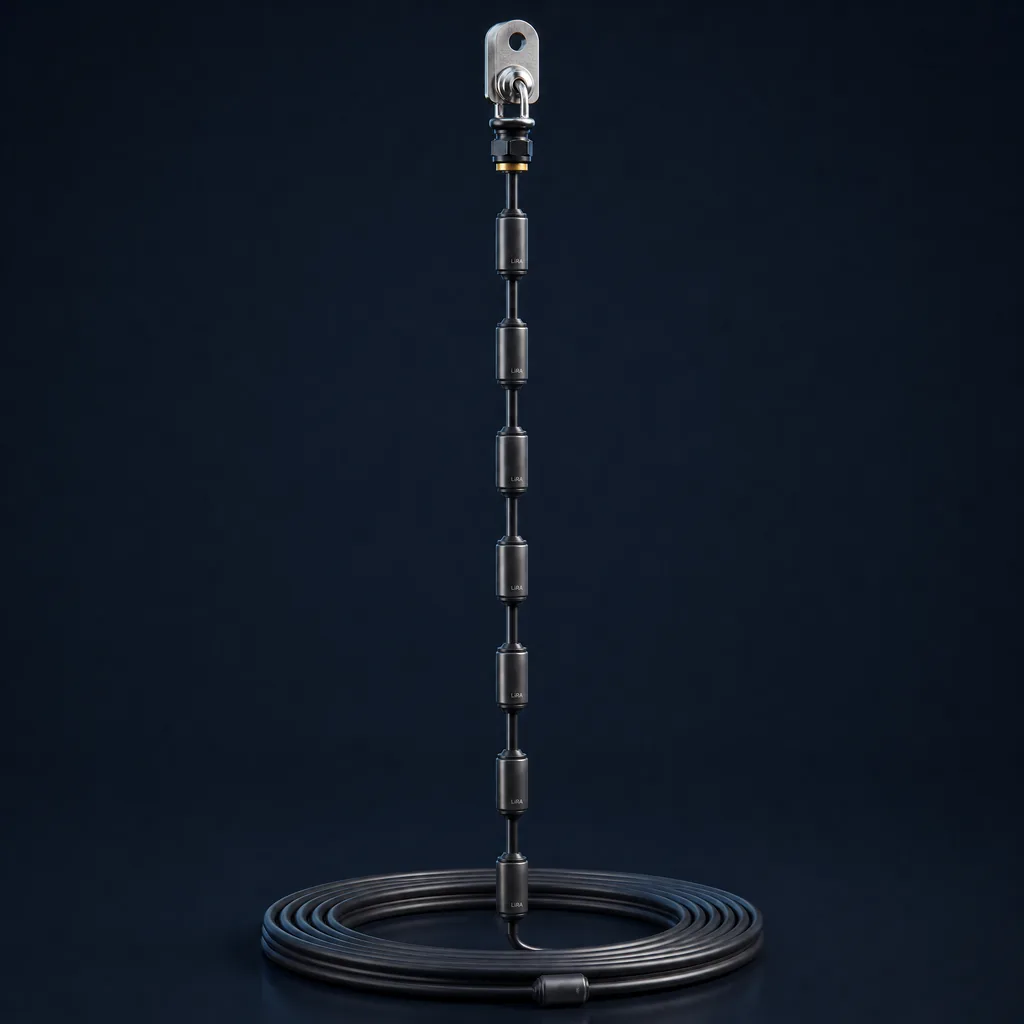
LiRA Grain Cable
Ten channels. Every layer of the grain.Heat in stored grain starts small, hides well, and costs money the moment it's missed. The LiRA Grain Cable hangs the full depth of a bin, from the surface down to the floor, taking a temperature reading at ten points along its length. A pocket of warmth in the middle of a bin shows up here long before it reaches the surface. Ten channels, one cable, wired straight into the bin controller. It's the first sign that something is changing inside the grain, before anyone would know to look.
- Ten channels, grain surface to floor
- Wired straight into the bin controller
- Built to run in a working silo, not a lab
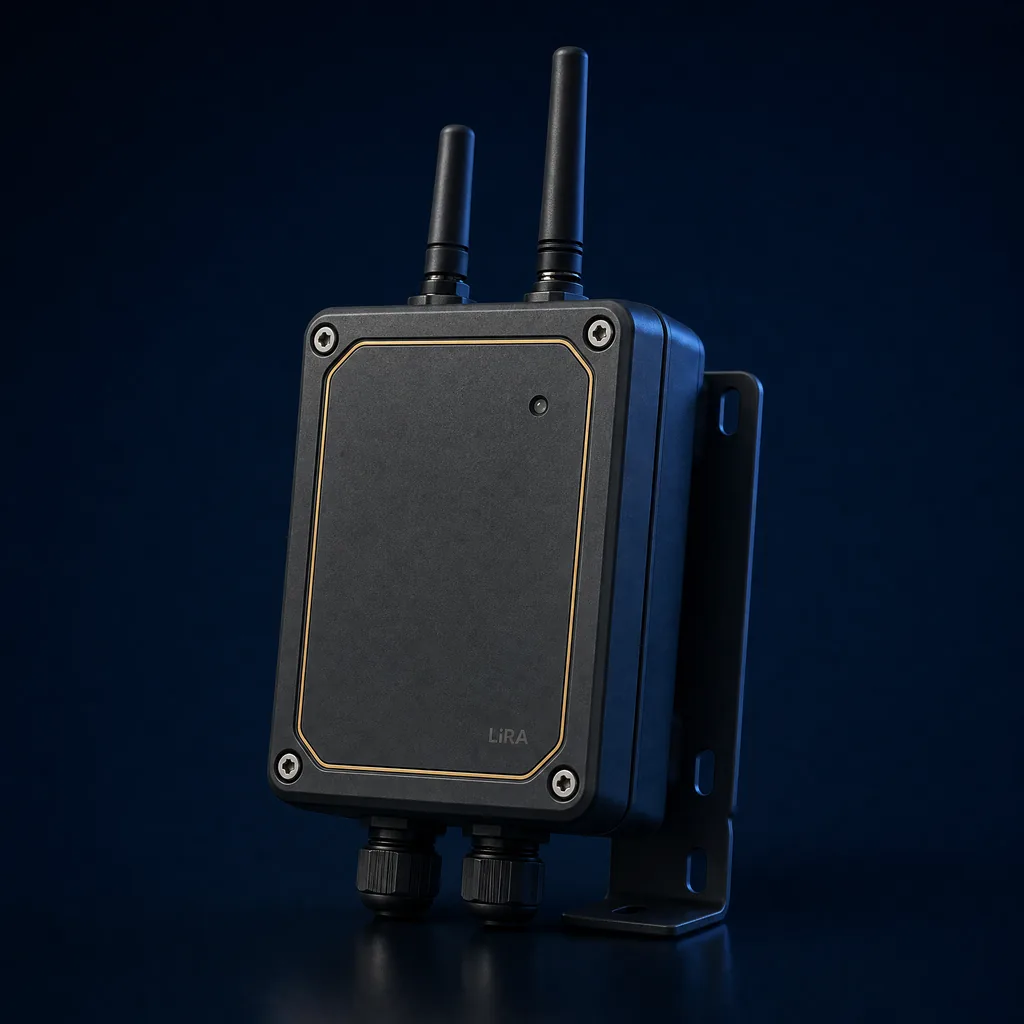
LiRA Edge
A LoRa link, fixed to every bin.Every bin gets its own LiRA Edge controller, fixed at the top, drawing in readings from the sensors on that bin. It talks to the site's Bin Controller over LoRa, a long-range radio built for exactly this: a working silo yard where cables and steel get in the way of ordinary wireless. No cellular data plan per bin, no line cut by a forklift. Just a steady, low-power link carrying temperature and condition readings back to the gateway, bin after bin, hour after hour.
- LoRa 868 MHz, kilometres of range across a site
- One Edge controller per bin
- Low-power radio link, built for a working yard
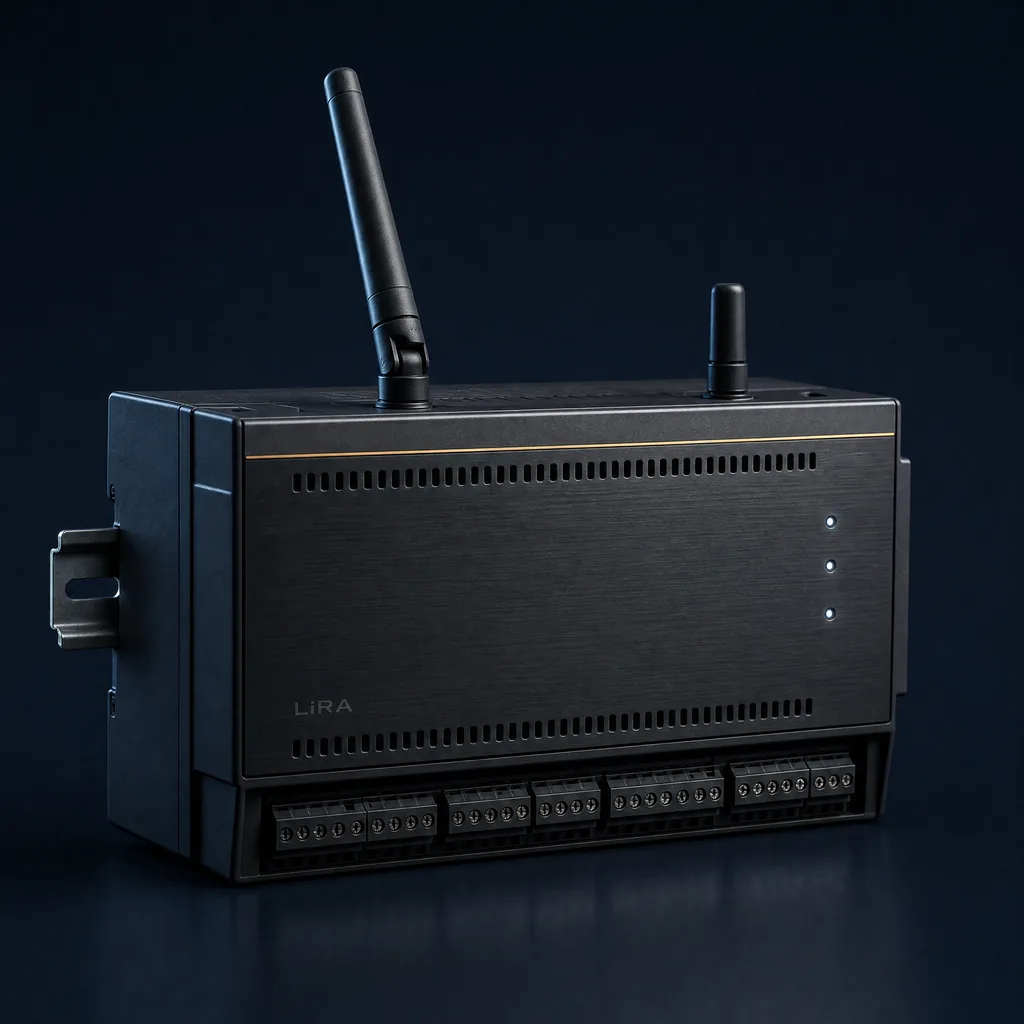
LiRA Bin Controller
One gateway, watching the whole site.The LiRA Bin Controller is the site's gateway: it gathers readings from every Edge controller on the yard and sends them out over a cellular link, no site Wi-Fi required. A local web page on the unit itself lets an installer check status and settings without needing a laptop full of software. Firmware updates roll out blue/green: the running version stays live until the new one is up and healthy. It's built for ordinary working sites, where the signal is weak and the power isn't guaranteed.
- Cellular link, no site Wi-Fi required
- Local web interface for on-site checks
- Blue/green updates: the running version stays live until the new one is healthy
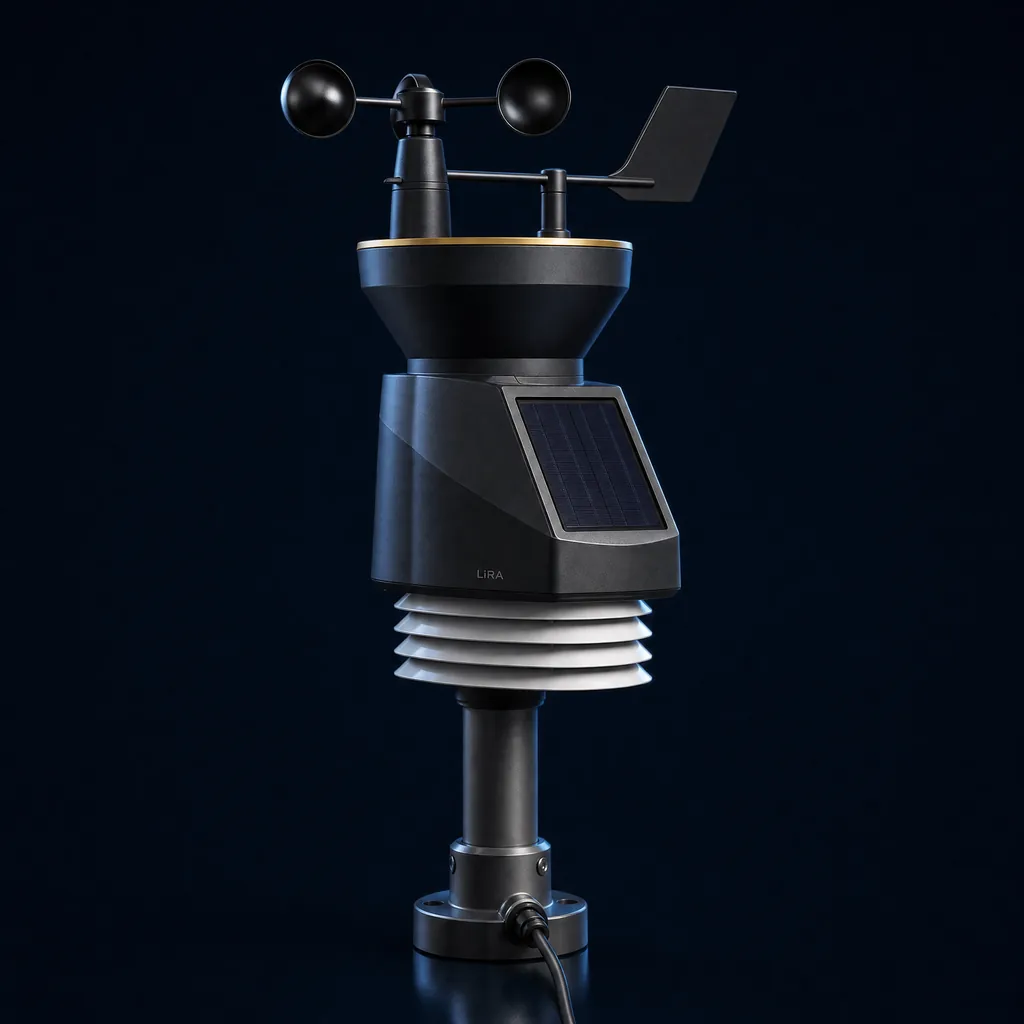
LiRA Weather Station
One station, the whole site's weather.Aeration only works if you know what's happening outside the bin, not just inside it. The LiRA Weather Station sits on site and reads wind, rain, temperature and humidity, feeding live outside conditions into the same system watching the grain. That's what tells LiRA whether running a fan right now will actually dry the grain, or just push warm, damp air through it. One station can cover a whole site, so every bin's automation is working from the same real numbers, not a guess.
- Wind, rain, temperature and humidity, in one unit
- One station can cover a whole site
- Feeds live conditions into the fan automation
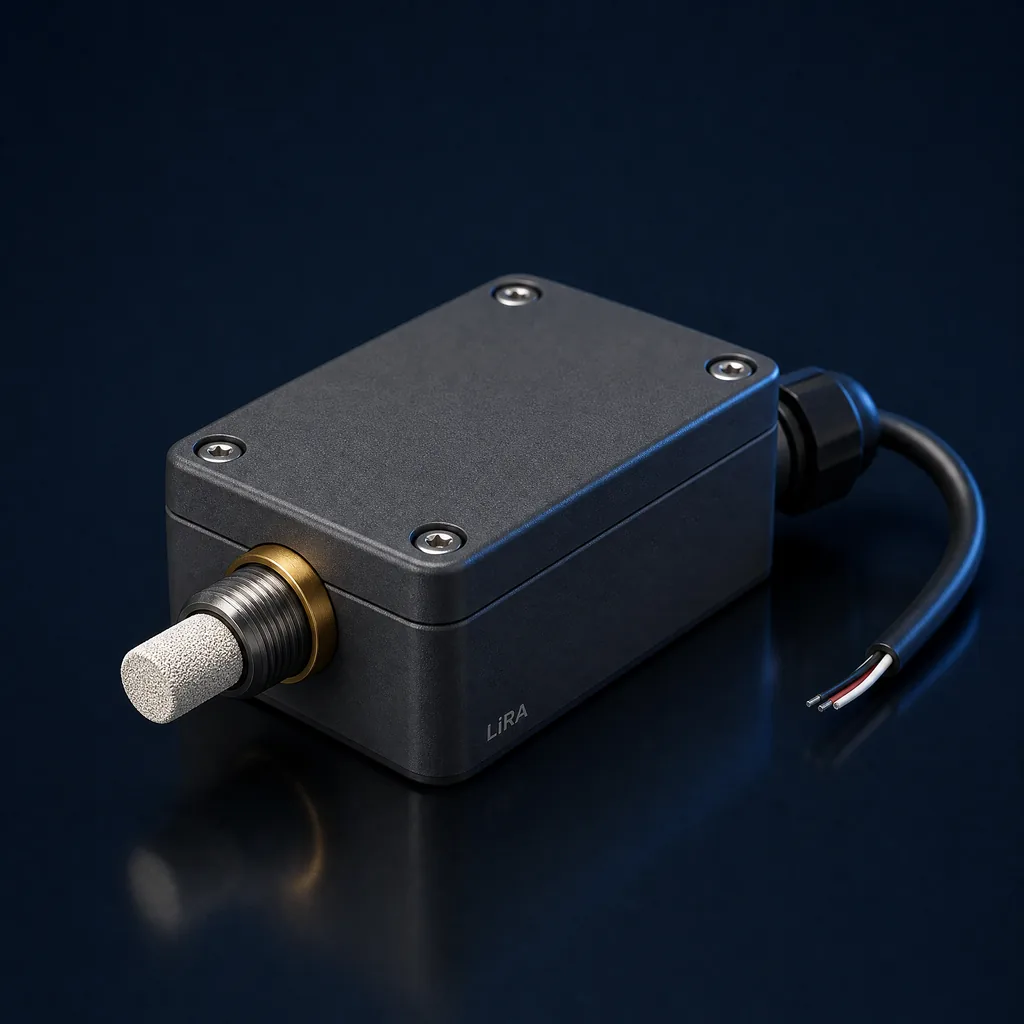
LiRA Headspace Sensor
The earliest sign of trouble, read directly.Grain gives off signals long before anyone can see or smell a problem. Insects respire and raise carbon dioxide. Moisture changes humidity in the air above the grain. The LiRA Headspace Sensor sits in that space, above the surface or under the aeration floor, reading CO₂, humidity and pressure continuously. A rise in CO₂ with no obvious cause is often the first hint of insect activity, well before it would otherwise be noticed. It's a quiet, early signal, not a siren after the fact.
- CO₂, humidity and pressure, in one sensor
- Fits headspace above the grain or the plenum below the floor
- An early signal for insects and rising moisture
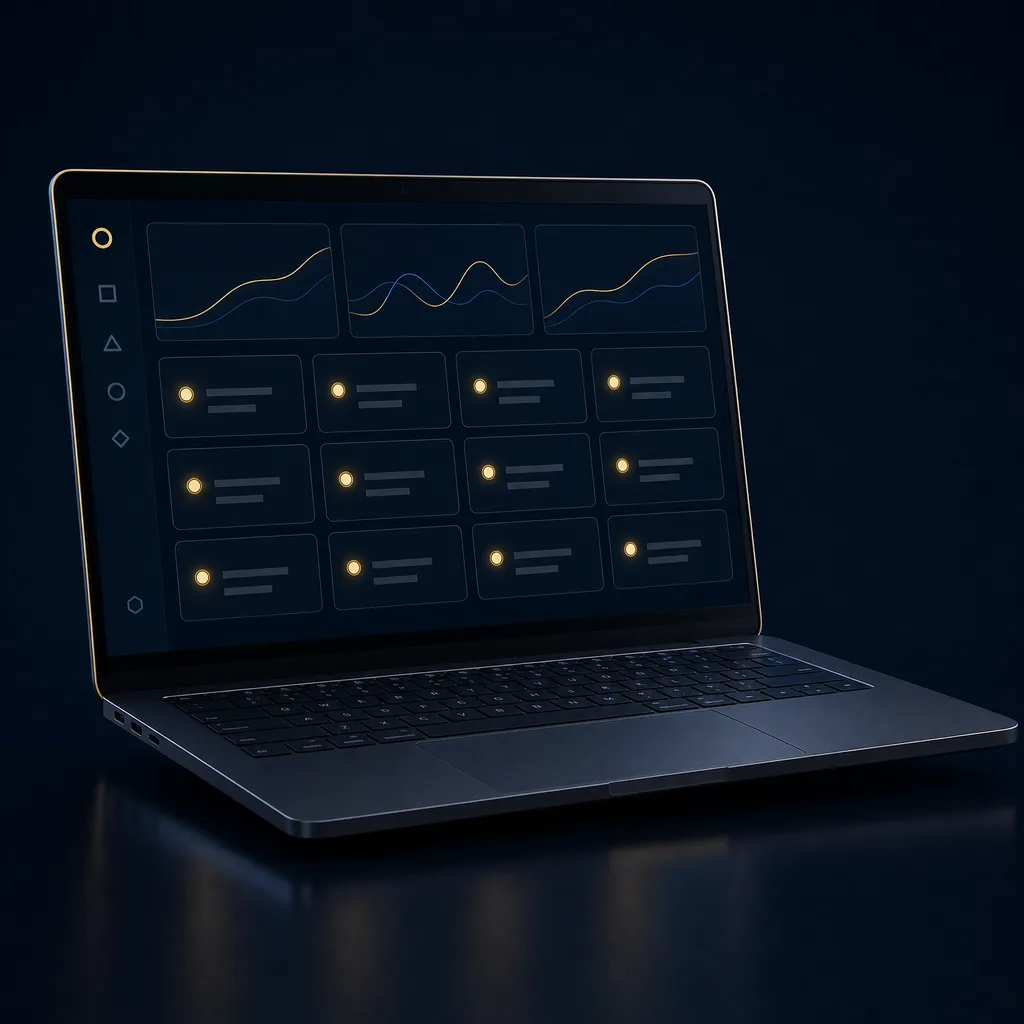
LiRA Cloud
The judgement layer, watching every bin.LiRA Cloud is where all the sensing comes together. Every bin on a site checks in every ten minutes, so the fleet view stays close to live. Thresholds and an EMC engine turn raw readings into a judgement: does this bin need air moving through it right now, or is it fine? Alerts fire when something needs attention, go quiet once it's handled, and clear themselves once things are back to normal. Fan automation acts on that judgement directly, watching every bin on the site, around the clock.
- Readings every 10 minutes, every bin
- Alert rules with cooldown and auto-resolve
- 24/7 fleet watch across every site
- Fan automation driven by the EMC engine